
Automated EOS SLS Workflow
for series production
Repeatable and scalable – from print to finished part
As additive manufacturing becomes increasingly industrialized, the demands on cost efficient, reproducible, and scalable production processes are also increasing. At the same time, companies face the challenge of managing growing production volumes with limited personnel resources.
Industrial 3D printing involves far more than the actual printing process. Post processing steps such as unpacking, cleaning, surface finishing, and powder management must work together reliably to turn individual process steps into an efficient production workflow.
AM Solutions integrates these process steps into a seamless workflow for industrial production with EOS SLS printers. Automated solutions reduce manual intervention, structure material flow, and create the foundation for reproducible and scalable production processes.
Discover the workflow and the right solutions for every process step:
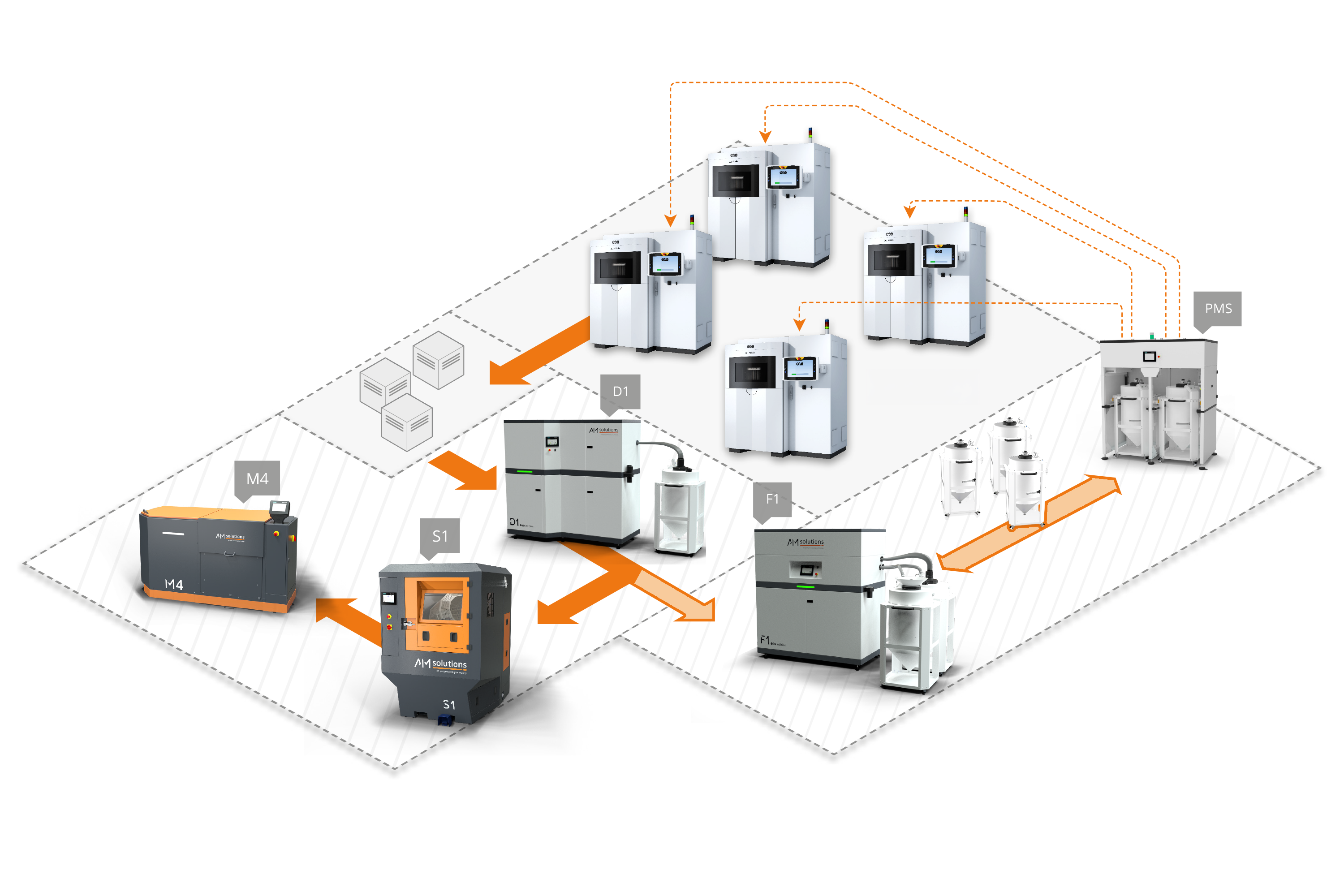
Up to 4 EOS SLS Printers
- Sieving, mixing, powder conditioning
- Powder storage
- Powder supply
- Unpacking
- Cleaning
- Surface Finishing
- Part flow
- Powder loop
- AM Solutions process area
- Example setup – adaptable to your production
Automated unpacking
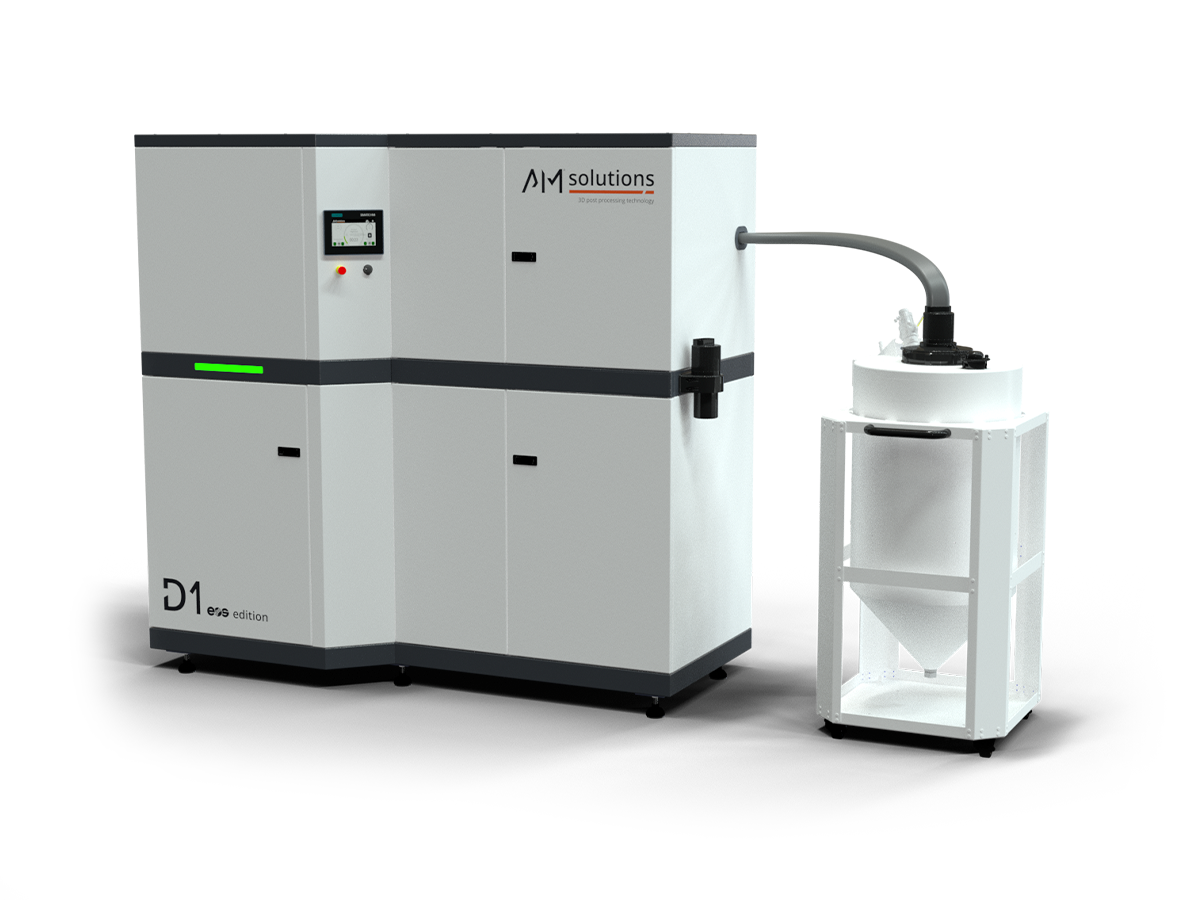
After printing, the build job is automatically removed from the exchangeable frame by the D1 or D3, and the parts are released from the powder cake. The recovered powder is transferred to the F1 for powder preparation, while the parts proceed to the next post-processing step.
More infoPowder preparation
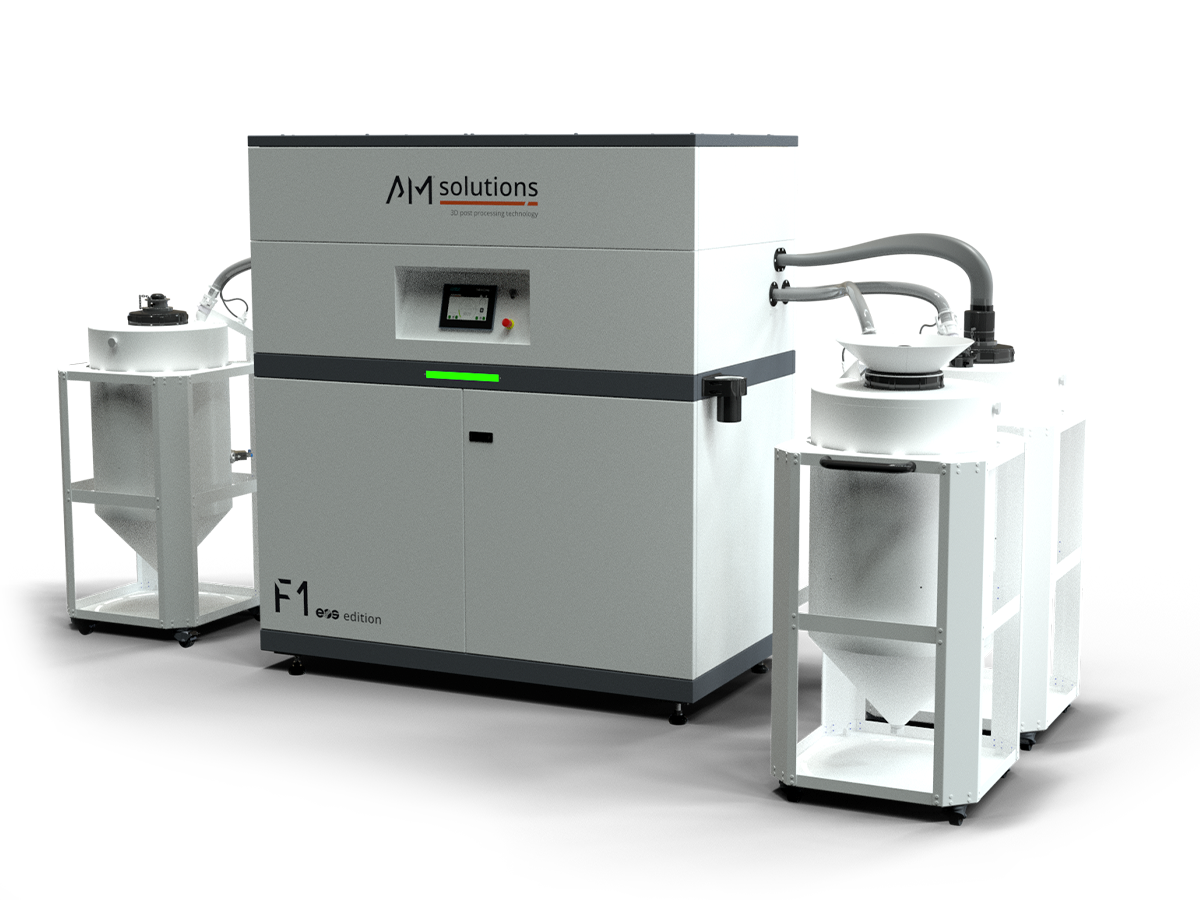
The recovered polymer powder is automatically powder conditioned, sieved and mixed with new powder using the F1. This prepares the material for the next printing process.
More infoIntermediate powder storage / resting time
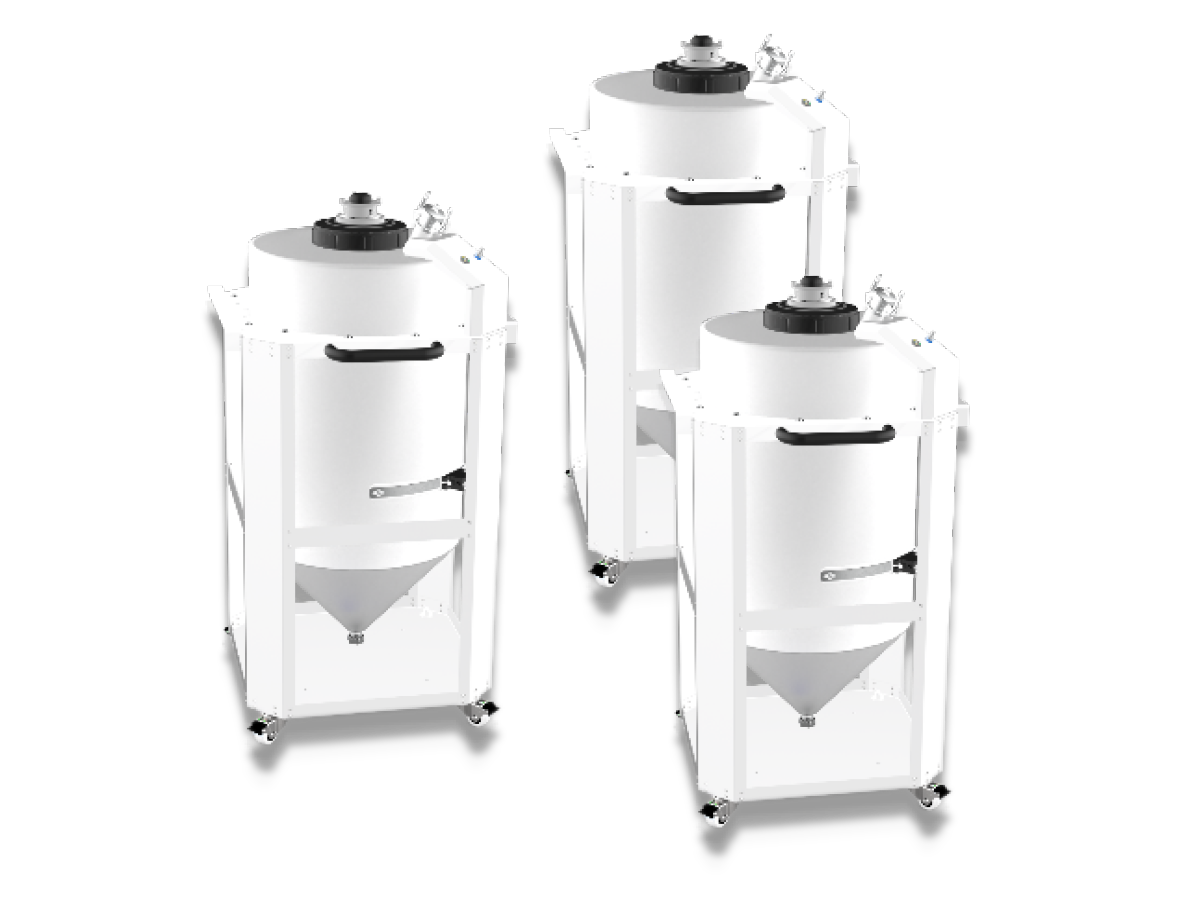
After mixing, the prepared polymer powder is stored for a defined period in accordance with the specifications of the material or printer manufacturer. This allows, among other things, electrostatic charges to dissipate before the powder is returned to the printing process via the PMS.
Powder supply
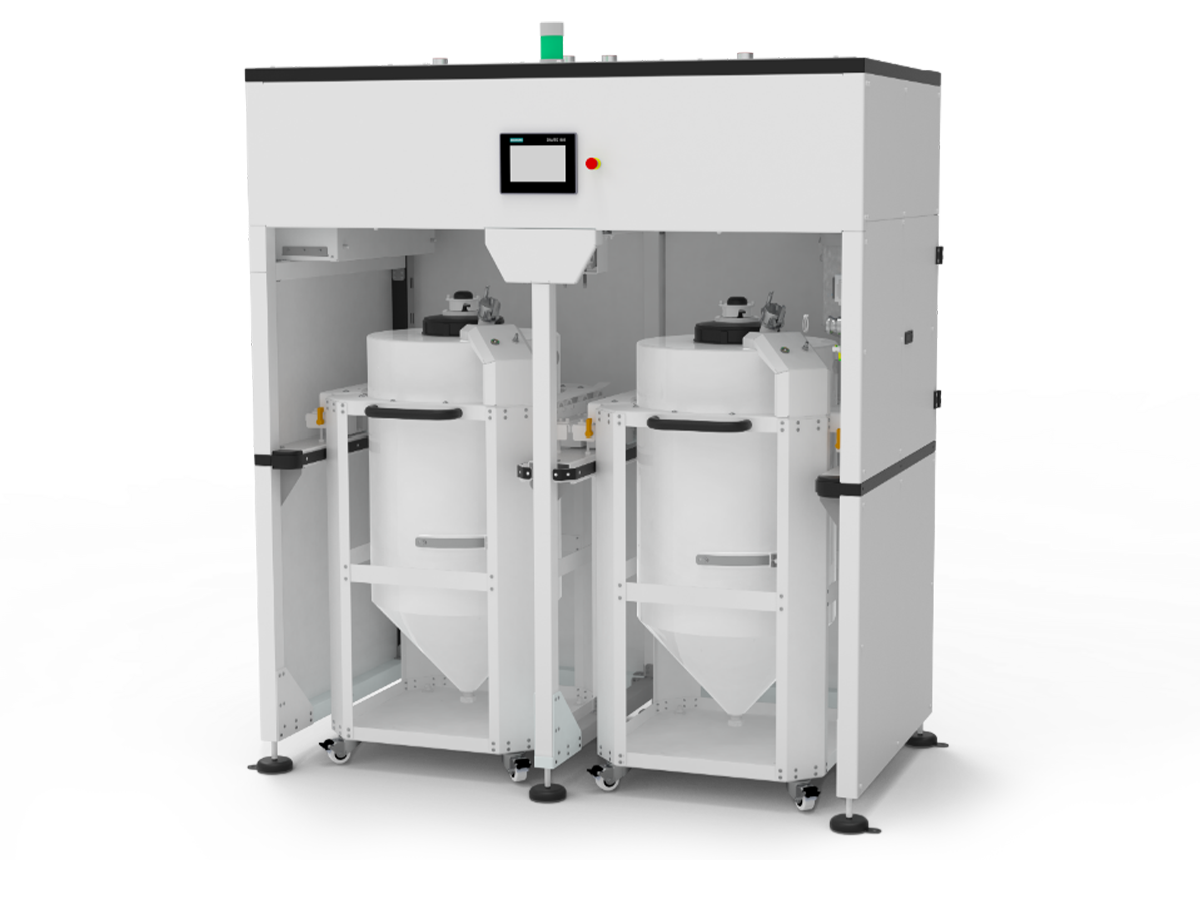
The Powder Management System (PMS) distributes the prepared powder to up to four EOS SLS printers. This enables powder supply to be automated and scaled even in production environments with multiple printers.
More infoPrinting
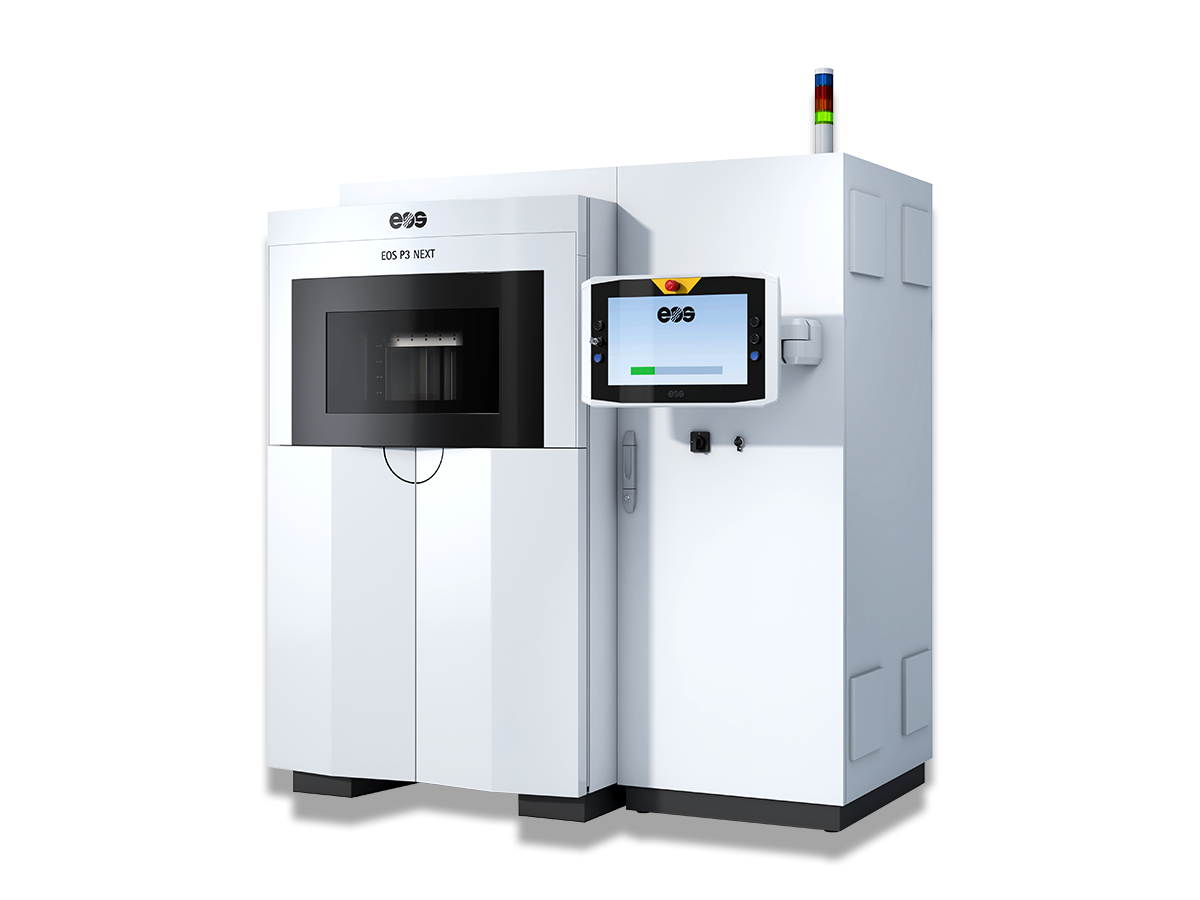
The SLS printers produce the parts, supplied automatically with prepared powder via the PMS.
Cooling the build job
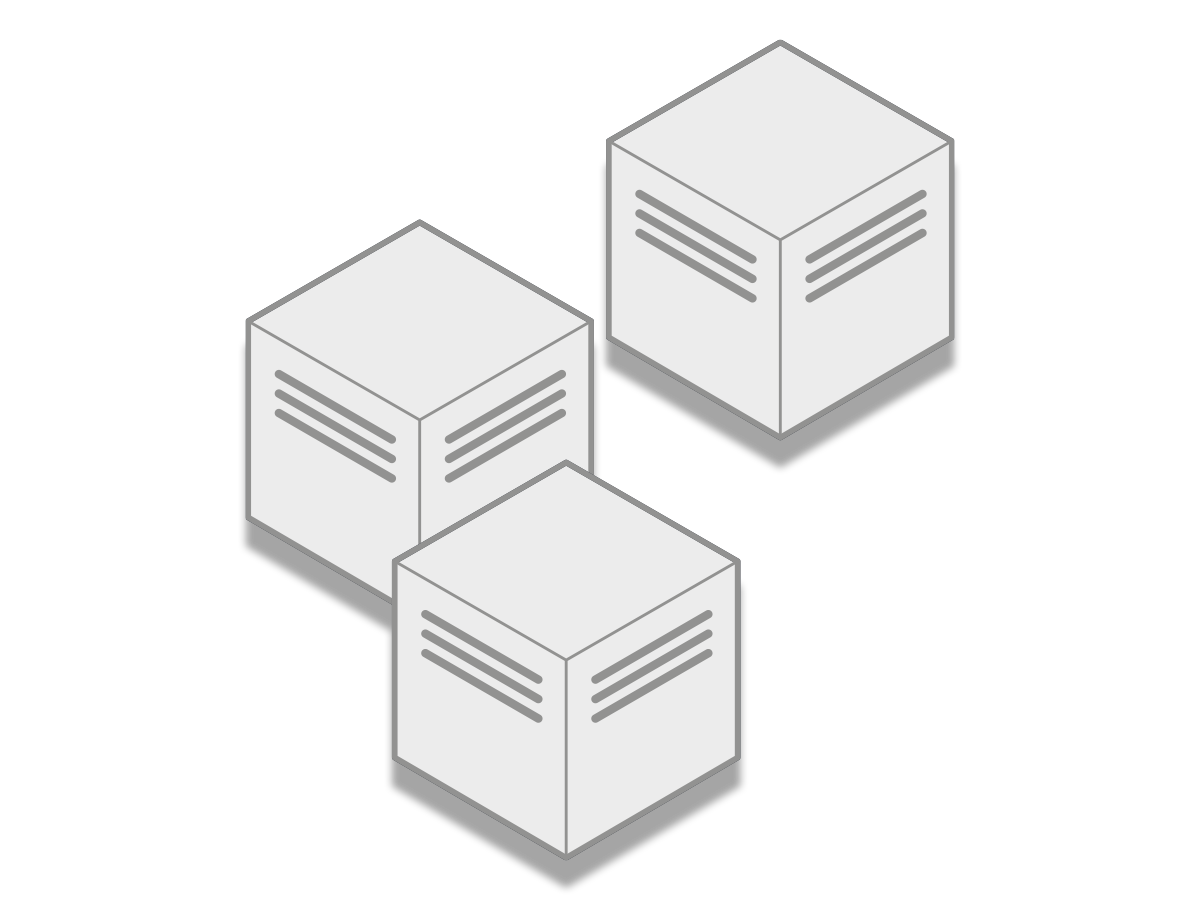
After printing, the build job cools down in the cooling area before it moves on to automated unpacking.
Cleaning and shot peening
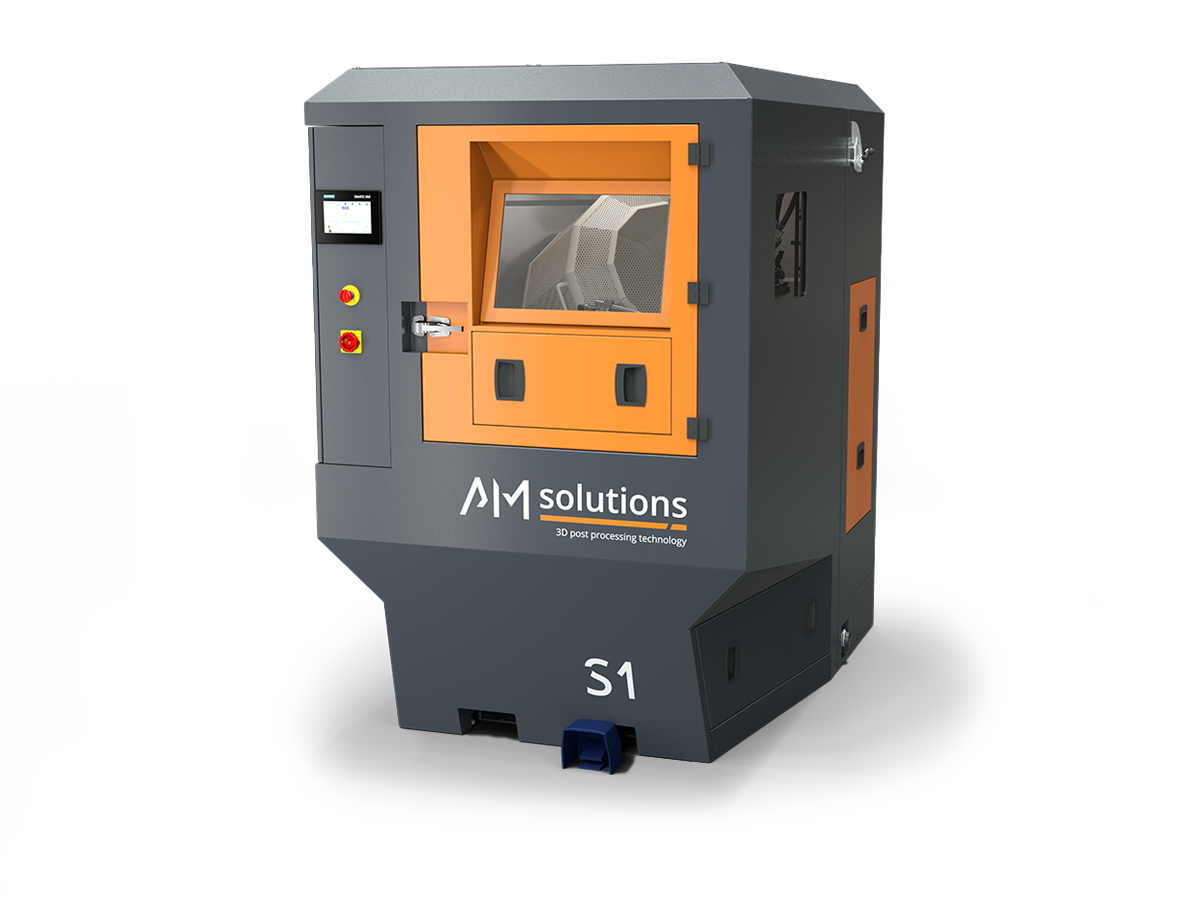
The S1 or S2 performs automated cleaning and shot peening of the 3D-printed parts. The appropriate blasting system is selected based on the required throughput.
More infoSurface finishing
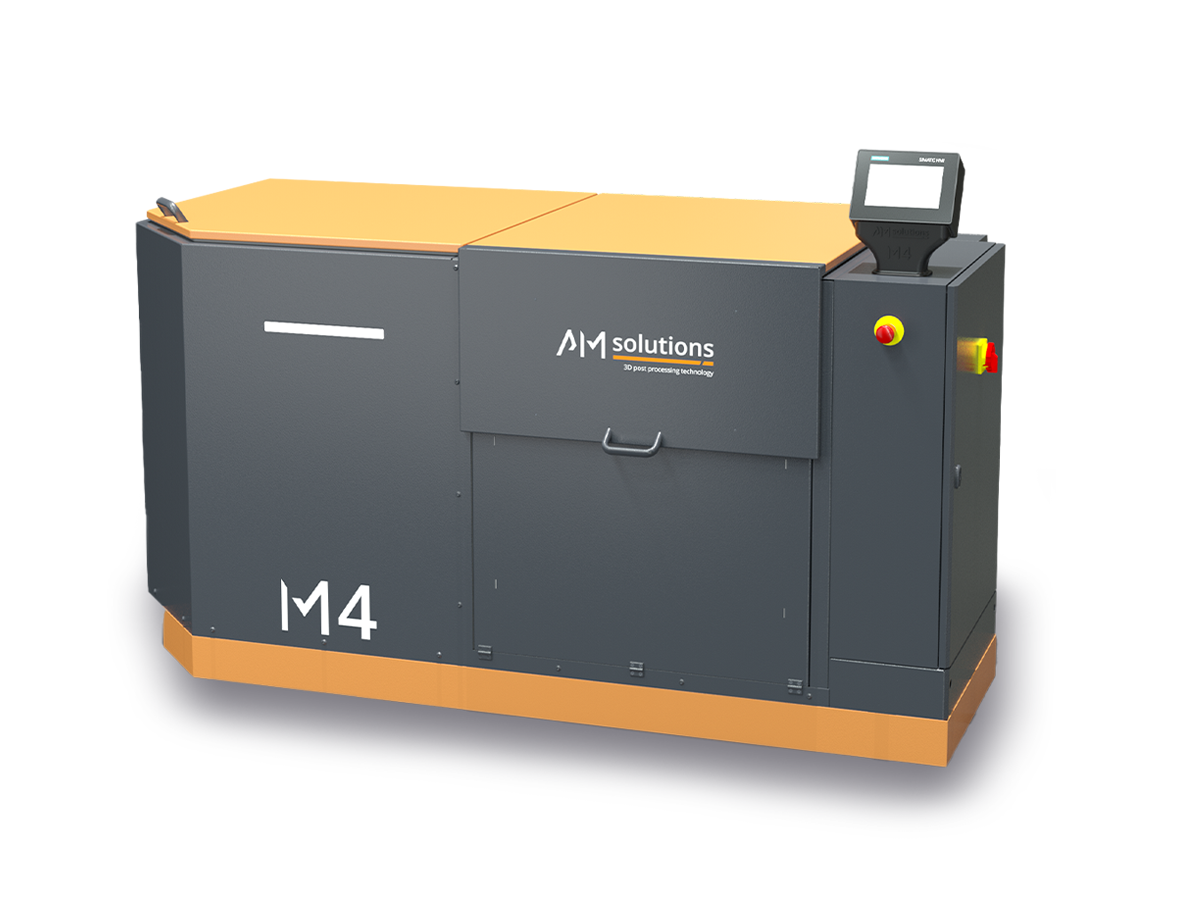
Depending on the surface requirements of the final part, the workflow can be extended with additional post-processing steps, such as mass finishing with an M1 or M4. This allows processes such as polishing, smoothing, deburring, or homogenizing to be performed automatically.
More info
More than the sum of its parts:
one integrated production workflow
Automating individual machines is an important step. However, their full potential is only realized when the individual process steps are connected.
An integrated workflow reduces manual handoffs, structures material flow, and creates defined interfaces between the actual printing process and subsequent post-processing steps.
- Lower cost per part
Automated process steps reduce manual work and minimize interruptions throughout the process chain, from unpacking to surface finishing. Recovered powder is prepared for reuse as part of the automated workflow. The result: higher productivity with existing staff and lower costs per part.
- Built for series production
The modular workflow allows printers, unpacking, powder management and post-processing systems to be combined and configured to meet individual production requirements. The setup shown is one example – it can be adapted and expanded as production volumes grow.
- Reproducible quality
Defined process parameters help maintain consistent conditions throughout the process chain. By reducing manual intervention and potential sources of error, the setup supports reproducible part quality from one build job to the next.
- Increased operator safety
Unpacking, powder handling, powder supply and cleaning are integrated into an automated, closed-loop workflow. This minimizes manual powder handling, helping to limit operator exposure to powder and create a safer, more controlled working environment.
Discover AM Solutions' systems throughout the 3D printing workflow!
Planning your automated SLS workflow?
Our experts configure the setup for your printers, volumes and floor space!
